There are many kinds of courage. Some are loud and bright, seen in grand battles and bold decisions. Others are much quieter. They appear in the small steps people take when the world has taken something from them. This more peaceful form of courage is often overlooked because it does not shine the way victory does. However, it may be the strongest kind of all. It is the courage to stand up after being knocked down. The courage to move forward when the heart is heavy. The courage to choose the next step even when the path ahead feels painfully uncertain.
Stories across history and literature have shown that true strength is revealed not only in a person’s victories but in how they continue after significant loss. This form of endurance often shapes the most memorable characters. Their heroism does not rely on glory. It grows from grief, patience, and the decision to keep going.
Albert Lord’s The Road of Vultures captures this form of courage with clarity through Prince Luka Vernik. Luka begins his journey not with triumph, but with heartbreak. His home is destroyed. His loved ones are gone. His world collapses in a single night. What remains is a young man walking through the ashes of everything he once knew. He does not rise because he feels brave. He rises because he must. And that is what makes his story powerful.
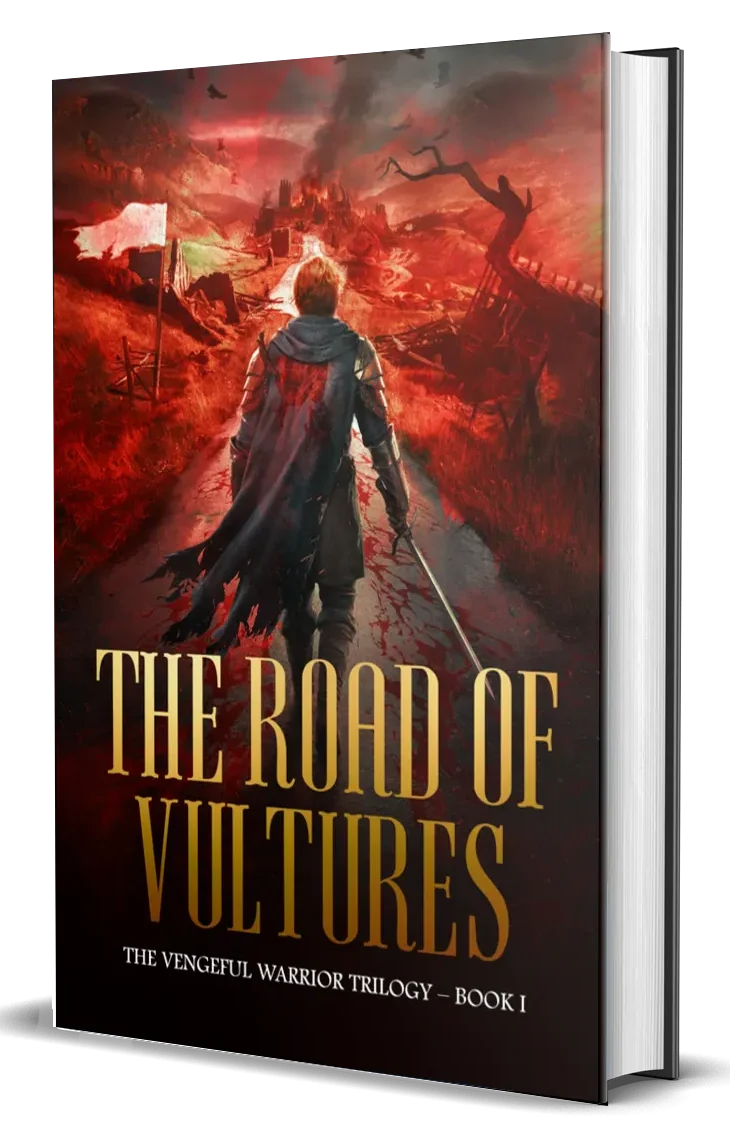
Luka’s heroism is not loud. It is built on endurance. He carries grief through every scene, but he does not let it stop him. Instead, he allows that pain to become part of his strength. Readers see him struggle, doubt, break, and rebuild. This slow and steady forward motion becomes the heart of the story. It reminds us that some of the strongest people are not those who stand tall, but those who stand again.
This type of hero is rare. Many fantasy stories are filled with chosen champions, gifted leaders, or warriors with a clear purpose. Luka does not begin with certainty. He starts with loss, and that loss shapes his choices. It would be easy for him to fall under the weight of his grief, yet he continues. He learns to trust his own endurance, and through that, he grows in a deeper and more meaningful way.
Characters like Luka reflect real life more closely than flawless heroes ever could. People do not overcome tragedy in a single moment. They rebuild piece by piece. They make slow progress. They learn to breathe again. This kind of courage is unspoken, but it is powerful because it is familiar. Anyone who has faced hardship can see a part of their own journey reflected in Luka’s story.
The book,The Road of Vultures, invites readers to walk beside a hero who carries his wounds openly. It shows that strength does not always look like a raised sword. Sometimes it seems like a tired man choosing to take one more step. Luka represents the kind of heroism that grows quietly, the kind that comes from surviving what should have broken him.
If you want a story that honors this deeper kind of courage, this is the book to read.
Discover Luka’s journey in The Road of Vultures by Albert Lord and step into a world where endurance becomes its own form of heroism.
Available on Amazon: https://www.amazon.com/dp/1968966854.