Villains are often memorable not only for the destruction they cause but also for the personal qualities that make them stand out. Among the most compelling are siblings who turn their shared blood into a weapon. Sibling villains capture the imagination because they are bound by loyalty to each other, creating alliances that make them harder to defeat. They bring a different kind of tension to stories, showing how family bonds can twist into something terrifying. From myth and history to modern fantasy, sibling villains leave a mark that readers and audiences rarely forget.
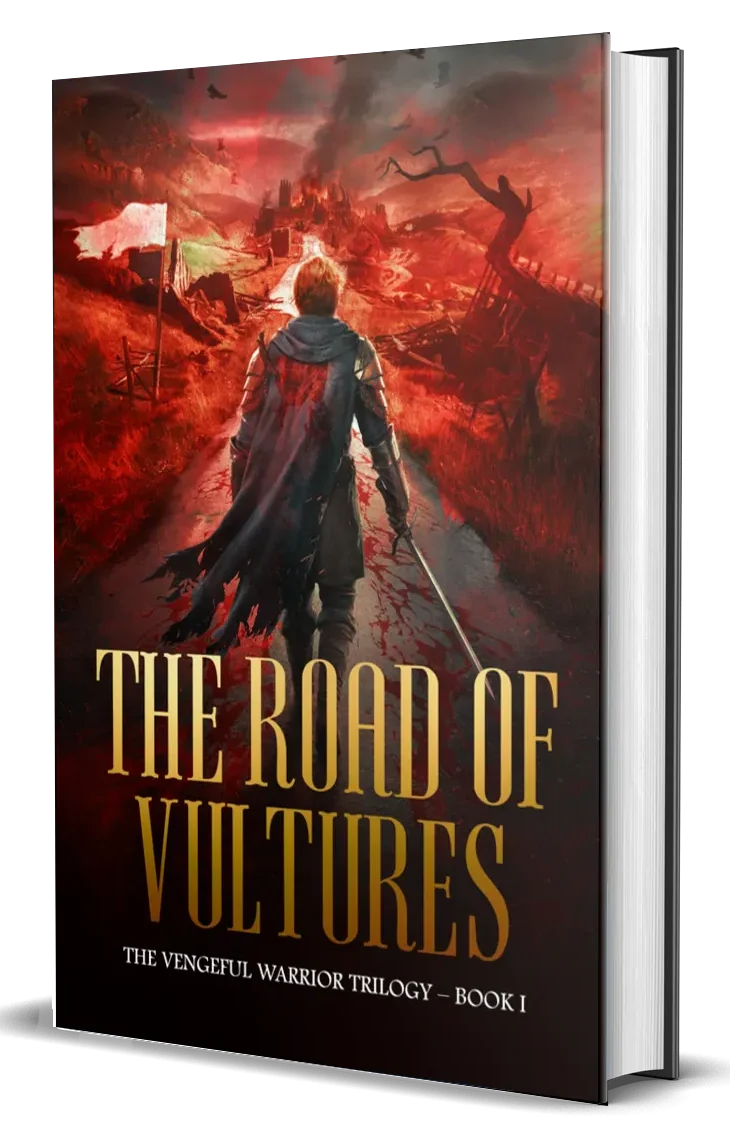
Albert Lord’s The Road of Vultures introduces three such figures: the Zlikrej brothers, Privus, Drugi, and Omarius. After attacking the home of Prince Luka Vernik, they leave behind devastation that sets the entire story in motion. Their power does not lie only in strength or cruelty but in the fact that they act as a unit. Each is an individual threat, but together they represent a living force of destruction. Luka’s blood oath to hunt them down gains its weight because he is not facing one enemy but three, each bound by the same family loyalty that he himself has lost.
This idea of villainous siblings has deep roots in literature. In Shakespeare’s King Lear, the scheming sisters Goneril and Regan work against their father and sister, showing how ambition can turn blood ties poisonous. In myth, the story of Romulus and Remus, twin brothers who founded Rome, ends with one killing the other, showing how even shared destiny can lead to betrayal. In modern fiction, the White Witch’s siblings in C. S. Lewis’s tales, or even the Lannister twins in Game of Thrones, use their bond to disrupt kingdoms and shape events with their combined force.
The Zlikrej brothers stand within this tradition but also bring something unique. Where many stories focus on the rivalry between siblings, Lord presents the brothers as united in cruelty. Their bond makes them more dangerous because Luka cannot hope that division will weaken them. This unity contrasts sharply with the fractured kingdom of Estravia, where loyalty and trust are scarce. In this way, the villains are not only enemies but mirrors of what Luka has lost and what his kingdom desperately needs.
Readers love to hate sibling villains because they feel real. Many people understand the intensity of sibling relationships, including the closeness, rivalry, and unspoken competition. When those dynamics are twisted into villainy, the result is both fascinating and unsettling. It is not hard to imagine how such loyalty, if directed toward cruelty, could become nearly impossible to stop.
Lord’s choice to give Luka three enemies rather than one also raises the stakes of the story. Each brother represents a challenge in his own right, but together they remind readers that vengeance is never simple. To defeat one is not to end the journey, but only to step into the shadow of the next. This layered conflict keeps the tension alive throughout the book, ensuring that readers will keep turning pages.
Sibling villains endure in stories because they remind us that family, usually a source of love and strength, can also become the source of our greatest fears. In The Road of Vultures byAlbert Lord, the Zlikrej brothers express this truth with haunting clarity. They are more than characters to be defeated; they are symbols of the twisted power that family bonds can hold. Readers may despise them, but they will not forget them.
Step into Estravia and meet the villains you’ll never forget. Start reading today, it’s available on Amazon: https://www.amazon.com/dp/1968966854.